Sunday, November 22, 2015

Violence in the Israeli-Palestinian Conflict

Violence in the Israeli-Palestinian Conflict
Isaac and Alfonso


Although the Israeli-Palestinian conflict has been raging on arguably almost nonstop since the establishment of Israel after WWII, the conflict has recently taken a new turn. As of Monday, October 17th, a total of 52 deaths have occurred between the two groups over the past two weeks. The attacks are taking place in public locations, including on a bus that had been boarded by the assailants and at a bus station where the attacker crashed into the bus stop and got out to hurt the people there. It does not seem like this violence is in any way organized or pre-orchestrated, and the offensive action taken by the Palestinians does not seem to be supported by any particular group. The attacks could potentially be out of frustration that the West Bank conflict has been raging on for what seems like forever and it does not look like a solution or agreement on this issue is in sight. Alternatively, they could be because the initial attacks caused the searching of Palestinian homes and towns which caused anger and more attacks (a kind of spiral effect).  The Atlantic even goes as far as to ponder whether or not a “Third Palestinian uprising may already be underway”( The Atlantic Oct 13). Palestinian uprisings, which also occurred in the 1990s and 200s, are also known as “Intifadas.”   Although Nir Barkat, the mayor of Jerusalem, wanted the Palestinian neighborhoods of Jerusalem to be closed due to the issue, the government is not currently trying to fix the problem by taking extreme measures such as these but rather has placed “hundreds more security personnel in Jerusalem and other cities”( The Economist, Oct 17 ). The attacks supposedly came from East Jerusalem, which is one of the most (if not the most) important part of the city to both groups.
This seemingly eternal conflict could be said to be related to the ideas of cultural relativism in some ways. In this conflict it is evident that the two groups of people have very different views on Israel. Cultural relativism is the system of beliefs that hold that one’s ideas are formed based on how they are brought up and their environment. Many Middle Eastern countries have been shown to reject Israel as a state because they disagree with the idea that Israel should be a Jewish state; in fact, these people believe that their rights are being violated by the presence of the state of Israel. The heart of the conflict is based on the idea that the Palestinian people were kicked out of their homeland in order to make room for the establishment of Israel, so in their minds a great wrong has been committed against them.  On the other hand, many countries around the world recognize Israel as a legitimate independent state that was fairly established. Although the presently living Palestinians that currently take part in this conflict were, for the most part, not alive during the establishment of Israel, they were educated to believe that an injustice occurred at the founding of the Israeli state. On the other hand, the people of Israel (needless to say) do not hold this belief and rather believe that the aggression and wrongdoing is actually coming from the Palestinian side. Therefore, cultural relativism exists in the sense that one side believes that the injustice was in ousting them from their homes, whereas the other side believes that the true crimes are the acts of violence that are being committed against them (not to say that Israel does not also take violent action).  This conflict is also related to the idea of state sovereignty and territorial integrity.  People of the Palestinian region are against Israel and do not want it to exist, like many other Arab states. This leads to Israel’s state sovereignty and territorial integrity to be violated since there are some who do not want to recognize it as a state.
Additionally, there are clear violations of human rights from both parties in the recent events of violence happening in Jerusalem and across Israel. The basic right to life is clearly being violated in this situation, as well as the right to safety and a feeling of safety. The idea that the lone wolves that are committing these crimes against both sides are not backed by a governmental or overarching organization does not mean that human rights are not being violated; in this case, individual people are actually violating the rights of others in a significant way.

Directly Cited:

Other sources (some used for info gathering, others just links to information for readers) 


Tuesday, November 3, 2015

The Modern Day Gulag-North Korean Concentration Camps

The Modern Day Gulag-North Korean Concentration Camps
Josh Roselli and Alex Friedman


On the topic of human rights, North Korea has been long cast in the shadows by the global community due to concerns over national security. In the modern age, world leaders and Western civilization primarily concern themselves over the potential imminent nuclear threat that North Korea creates, as its brutally totalitarian ruler, Kim Jong Un, continues his publicized critique on Western nations, specifically the United States. Human rights violations, crimes against humanity that spawned early in the 1900’s and to this day vigorously continue, are not illustrated or argued. North Korea contains numerous concentration camps, camps filled by people in the lowest tier in their created “caste” system. These prisoners, who are usually family members of those who have “opposed the government”, are forced into a brutal labor system, where death is considered as a release from the starvation, harsh living conditions, and endless beatings that these people encounter day by day.

A global estimation of the total amount of North Korean civilians that actually call these camps “home” range from 90,000 to 120,000 people, with upwards of 400,000 people since the camps’ foundation losing their lives to starvation, torture, and execution. The purpose of these camps is to “enforce obedience and suppress crime by threatening not just the life of the dissenter, but also the lives of his loved ones.” As stated before, these “dissenters” are those who have either shown opposition to the Kim family’s rule, or who are related to Korean civilians who have defected to the South, or north to China. Usually, these camps are a life sentence; either you escape through execution, or hunger and disease will eliminate you first. Those who are born in the camps are given a preliminary education, which consists of basic arithmetic, reading, and writing, and then are placed in different aspects of manual labor as they grow older. In most cases, sex is harshly punished, and the impregnation of a women can lead to either immediate execution, or the birth of the child only to be executed in front of the parents. For example, a camp survivor (who remains unnamed due to security concerns) states that he heard of an execution where, “With shaking hands, the mother was forced to pick up her newborn and put the baby face down in water until the cries stopped and a water bubble formed from the newborn's mouth.” The brutal conditions in these camps draw clear comparisons to Nazi concentration camps, even a method of mass execution similar to Holocaust gas chambers has been reported, but not confirmed. The North Korean government vehemently denies the existence of these camps, yet they have been clearly documented though satellite photography.

As the global community looks to world powers, such as the United States, to place sanctions on North Korea that would abolish these camps, or at least thrust them into the spotlight of the media, significant obstacles present themselves that directly tie into the work we have studied in this course. A huge aspect of the global human rights community that we focus on in class is the United Nations, as these camps clearly violate almost every aspect of the UDHR, ICCPR, and ICESCR. North Korea has never ratified any of these covenants, but the topic of their human rights violations been frequently brought to the table. These prisoners are placed in impossible living conditions, denied the right to live, never given ample means of nutrition, and are forced into a modern day scenario of enslaved, forced, labor. The biggest obstacle to abolition of these camps, outside of the Korean nuclear threat if the West becomes too involved in the inner workings of their nation, is that two members of the UN Security Council, Russia and China, are allies of North Korea, and will readily veto any movement by the Council to bring North Korea in front of the ICC for fear of lost economic relation, and potential nuclear threat.

Questions for Discussion:
-        Given the current situation in relation to escalated United States relations with North Korea, how can we as a nation best combat these grotesque violations of human rights while avoiding war and ensuring the safety of our nation?
-        Will military involvement be the only true solution to the abolition of these camps? If so, why, and if not, how can the global community combat these camps in an effective way that does not involve a declaration of war? 
Links:

Wednesday, October 28, 2015

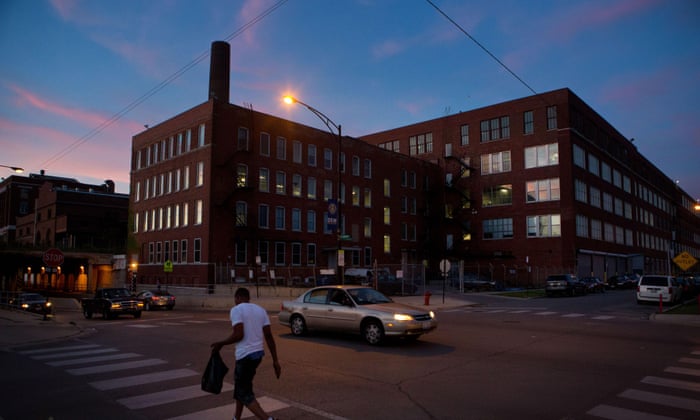
Chicago Police Department's Secret Facility in Homan Square


Chicago Police Department's Secret Facility in Homan Square

By Noah Charnas and Matthew Zhu


In Chicago’s Homan Square there is a warehouse owned by the Chicago Police Department. At Homan Square, the CPD randomly detains people while violating many human rights. Because the warehouse and its operation is off-the-books, the detention process there is called “disappearing”. When a detainee was detained, the police don’t have to report it which opened detainees to many human rights abuses.The statistics and data surrounding Homan Square are also very incomplete. There are 7,000 reported cases, but CPD did not report cases that did not end in a charge or cases before 2004. Since the warehouse was purchased in 1995, there is a substantial period of time that isn’t documented. From the disclosed statistics there is a clear racial bias as 82% of reported detainees were black.

There are many human rights abuses that occur at Homan Square. First, the CPD denied the right to an attorney. In 68% of the disclosed cases, the detainee did not have access to an attorney. Even for those that did, many said the access was limited and superficial. Second, the interrogation tactics that were used are very similar to those employed in Guantanamo Bay such as isolation, deprivation of food and being cut off from outside contact. Reports have also shown that police have used racial slurs and try to physically and sexually abuse detainees in order to extract information out of them.
Homan Square is a very interesting topic to think about when considering the different discussions that we have had in this course. With the readings of Just Mercy, that set the basis for this course and consumed most of our attention in the beginning of the year, we are very familiar with racial injustices within the justice system. Stevenson focused more on the ways that the law disproportionately affects black people due to racist judges, juries, and cities. The events at Homan Square focus on those that are supposed to be the enforcers of justice: the police. Racial biases are still prevalent throughout America and through other recent instance of police brutality, many of these incidents have been brought to the public eye. Within our discussions of the UDHR and subsequent human rights documents, we noticed how certain documents specified that it was illegal to discriminate based on race, color, religion, etc. The events at Homan Square clearly exemplify discrimination and denial of rights based off of race and color; therefore breaking the laws and policies that are the basis for the current human rights regime. Other reports of sexual abuse, only add to the catastrophe that has taken place in the middle of Chicago.


So, we ask you:
Who's responsibility is it to take action against the Chicago Police Department, the international community or the federal government?
How can we prevent human rights abuses, such as the one at Homan Square, from occurring?
What changes can the government make to provide all citizens the freedoms, that are taken away due to racial discrimination, they are obliged to?


Links:

http://www.theatlantic.com/national/archive/2015/02/behind-the-disappeared-of-chicagos-homan-square/385964/

Monday, October 26, 2015

Capitalism's Negative Impact on Human Rights: The 5,000% Increase in AIDs Medication

Picture of Turing Pharmaceuticals CEO Martin Shrekli caring about the well-being of his company's consumers
Turing Pharmaceuticals CEO Martin Shkreli caring about the well-being of his company's consumers 

          Capitalism is a system that allows and often encourages large companies to take advantage of its consumers.  Human rights are often disregarded in this competitive marketplace.  Some companies will ignore people's rights as declared in the UDHR for the sake of making more capital.  This issue becomes alarmingly evident in the case of Martin Shkreli, CEO of Turing Pharmaceuticals hiking up the price of AIDs medication daraprim 5,000% from $13.50 a tablet to $750.  This tablet, which costs about $1 to produce, now becomes difficult for the average American to purchase.  Shkreli knew he was taking advantage of the fact that this medication is need-based; he could only justify his decision by saying that this price increase was primarily to assist in further AIDs research.  Groups such as the HIV Medicine Association and The Infectious Diseases Society of America wrote to Turing Pharmaceuticals: "This cost is unjustifiable for the medically-vulnerable patient population in need of this medication, and unsustainable for the healthcare system".  Making this medication unaffordable to a large majority of people who need it is a violation of the UDHR that is being brought up by these groups against Shkreli and his company.  Article 25 states: "Everyone has the right to a standard of living adequate for the health and well-being of himself and of his family, including food, clothing, housing and medical care and necessary social services, and the right to security in the event of unemployment, sickness, disability, widowhood, old age or other lack of livelihood in circumstances beyond his control".  By raising the price, Shkreli and his company are completely disregarding this article.  This company has the ability to assist in securing everyone the right to their health, but in this capitalist society they place money over ensuring this right.  The focus of this company, which is meant to create medicine to improve the quality of life of those affected by AIDs, is much more on profit than on anything on the humanitarian level.  
         Disparity between capitalism and human rights becomes clearly evident in Shkreli's statements about the increase in price.  In an interview discussing his decision to increase this price to such an incredulous percentage, "Shkreli first said that it was 'a great business decision that also benefits all of our stakeholders'".  Stakeholders first, patients second; investors first, consumers second.  This dangerous idea is one that fills the capitalist society, where companies care more about their investors than the people actually purchasing the product.  It becomes especially dangerous when these companies ignore the actual needs of their customers just to make their stakeholders happy, as Shkreli stated.  Although he says the money will go to research, what company needs to increase the price of their product 5,000% just to make a 'fair profit'?  Furthermore, this is not the first time the Shkreli has tried drastically increasing the price of a pharmaceutical products of his own company: "He was forced out of the last drug company he founded, Retrophin, which specialized in buying the rights to little-known drugs and increasing their prices".  What's disturbing is that, in a capitalist society, that it is possible to do this.  Shkreli knows exactly what he wants by increasing his medication by 5,000%; the issue was that this time his intentions were exposed by a large number of people on social media.  

Discussion Questions
1.  Do companies owe their consumers anything; does Shkreli owe the purchasers of his drug anything?
2.  How do you prevent companies in a capitalist system from taking advantage of its customers?
3.  Is Shkreli justified in this as a business decision; is he right in trying to make as much profit from his company as he can?

Sources

Friday, October 16, 2015

Civil War in Somalia


The country of Somalia is a very young country that has not able to gain enough stability to prosper. Somalia was created in 1960 by merging the Italian Somaliland and the British Somaliland. It quickly became a socialist state in 1970 with Major General Barre in power. The overthrow of President Barre in 1991 by rebel forces started the civil war still going on today. Many regional governments have been established but they do not help the stability of the country.  The UN had some involvement in Somalia through military action and food aid in the 1990’s but they had little success. After over 20 years of unsuccessful national governments, an internationally supported government known as the Transitional Federal Government was established in 2012. This did not end the problems occurring in Somalia. Because of the amount of groups fighting against each other including the Transitional Federal Government, Ethiopian National Defense Forces, insurgents specifically the al-Shabaab, civilians are put in the center of the war.  According to nongovernmental organization, Human Rights Watch, all three of these groups are involved in the human rights violations occurring. Many times civilians are caught in cross fire between the government and insurgent forces. The lack of access to medical care means that an injury will most likely result in death. The insurgents also target children to recruit them into their militia or force them into marriages. Over 1,000,000 Somalians have been displaced from their homes to flee the violence in recent years. A majority of these Somalians are from Mogadishu, Somalia’s capital. If a Somalian can successfully escape the violence most likely after having to endure sexual abuses, beatings, and lootings, the humanitarian agencies face many challenges in helping them besides the large amount of people. Al-Shabaab creates blockades so supplies and assistance cannot get to the people in camps. There has also many attacks and killings on the doctors and personal working in the camps. Currently, the UN supports the African Union Mission in Somalia as a way to provide support to Somalia. It is currently looking to expand this involvement and the area the African Union Mission in Somalia covers but no definite plans have been made for how to solve the human rights violations in Somalia.
The ongoing Somali Civil War connects with a couple of critical issues we have already discussed in other current events presentations. In a similar manner to how the violence between insurgent groups such as ISIS in the Middle East have been fighting the government of Syria and Iraq, groups in Somalia such as al-Shabab fighting with the Traditional Federal Government had caused an influx of people leaving the country. That fact that over two million Somalis have been displaced once again raises the question of how we accommodate the needs of the refugees. We are able to see similar themes in refugee camps for Somali displaced peoples compared to the ones for Syrian war refugees, including their access to water, food, shelter, medical attention, and education. Some camps are even forced to shut down due to the efforts of al-Shabab to cut off humanitarian aid from the UN and global humanitarian agencies, similar to how certain Syrian refugee camps are targeted by radical groups such as Hezbollah. Connecting the story to Persepolis, there is a worrying tendency for both sides to use child soldiers as a means to fuel their war effort, although the situation is not an international conflict but instead a matter of civil war. Al-Shabab controlled areas can force boys at the age of nine to take up arms and fight against the TFG, under the ideology that they will be martyrs for the cause. Girls are also forced to support the war effort under al-Shabab’s sharia law, which requires them to marry members of the group and manage their homes as faithful wives, while all other options for girls such as pursuing university level education is cut off. The TFG of Somalia is also responsible for the severity of the child soldier problem in Somalia, since they have been documented recruiting their own children and killing those of al-Shabab’s.


How should the UN and international forces intervene in Somalia to be effective?
Is it possible to restore Somalia as a united nation, or is a multi-state solution the only way for Somalia to see the return of peace?

Sources:
http://www.globalsecurity.org/military/world/war/somalia.htm

Thursday, October 1, 2015

India Rape Crisis

               
      India has a long history of public and gang rape. This year there have been over one thousand cases of gang rape alone. The most recent attack was on July 30th and a few weeks ago the Amnesty International club had a fundraiser for the two girls that were sentenced to public rape. Two sisters, ages fifteen and twenty-three, were sentenced to gang-rape because their brother eloped with a woman from another caste.  In India it is strictly forbidden to marry someone that is in a higher class than you. The sisters and the rest of their family are part of the Dalit caste, which one of the poorer classes. Their sentence also states that after they have been raped they must walk around their village naked with black face paint on. The inhumane nature of this punishment makes us wonder what type of government would sentence two young girls to such a cruel punishment. The sentence was not created by an official Indian court but by an unelected panel of men. These panels act as a court in several Indian villages even though legally they have no power.  The problem with these illegitimate courts is that in many cases women are treated unfairly and are sentenced to cruel and unusual punishments. Unfortunately India’s Supreme Court does not enforce the rule of law onto these panels and as a result they continue to mistreat many Indian women. Non-profit organizations have tried to stop cruel punishment but unfortunately they have not successfully ended the unfair treatment of women.
      In this story, we can see not only flagrant human rights violations of the woman sentenced to rape, but also the widespread violation of human rights in connection with India’s dalit social caste. Just by glancing at the Universal Declaration of Human Rights, it is apparent that India, which signed the Universal Declaration of Human Rights in 1948, is not upholding its intentions to move towards universal human rights. The first human right that this case violates is Article 1 in the Universal Declaration of Human Rights. This article states that “All human beings are born free and equal in dignity and rights. They are endowed with reason and conscience and should act towards one another in a spirit of brotherhood”. The very status of women in rural Indian villages such as the one in the eastern Indian state of Jharkand is that they are considered “property” of their fathers or husbands. This violates the law that every human being is free and equal to any other, as property implies ownership, and ownership of a person does not equal freedom. Women in this village are viewed as property of their husbands or fathers. By raping these two sisters, the village views this not as a violation of their human rights, but as an attack on the honor of their husbands or fathers. The psychological state of the woman herself is completely ignored and viewed as irrelevant as she is held to be subhuman. Another article that this sentence violates is article 5 of the UDHR, which states that “No one shall be subjected to torture or to cruel, inhuman or degrading treatment or punishment”. The public rape of any woman is cruel, inhuman, degrading and undeserved. The even more disgusting part of this situation is that this sentence is even being debated, so much so that it has reached the Supreme Court. Even though it should be a no-brainer that this is a violation of human rights, the problem lies in the disagreement of what it constitutes to mean being human. The two sisters and their brother are part of the dalit social caste, otherwise known as the Untouchables. The Untouchables are the members of the lowest case of the Hindu caste system. Any contact with the Untouchables supposedly defiles members of the upper castes. Dalits are constantly subjected to appalling human rights violations, including murder, rape, forced prostitution and other forms of slavery. Although the caste system is ostensibly outlawed in India, these crimes are committed with impunity by members of higher castes. This caste discrimination in and of itself blatantly violates human rights, and explains why the punishment of these two sisters is even a question. If the sisters are dalits, they are for all intensive purposes, according to the caste system, sub-human and therefore will not be given human rights. So long as the misogyny that is so deeply entrenched in this village and the inherent dismissal of human rights due to the caste system remains, there is little hope for universal human rights. The best that can be done is to call on the international community to condemn, and more importantly, stop such violations.
Discussion Questions:

      Does public humiliation inherently violate human rights? Why or why not
      What can the international community to stop these kinds of cruel punishment?


Wednesday, September 30, 2015

The Plight of the Rohingya

                                                                                                        Isaac & Mike 


The Muslim Rohingya population in Myanmar is treated so poorly that they must flee the country, where their prospects are still very bleak. The Rohingya people have been in in Myanmar many generations, but the Burmese treat them as if they were all illegal immigrants. This is apparent when “there are 1.33 million Rohingya in Burma" and "only 40,000 have citizenship". This lack of citizenship allows them to be discriminated against in a society that strongly dislikes them. In 2013 there was a massive wave of violence against the Rohingya people by “radical Buddhist monks ". This has forced over 100,000 people into government camps where they are then not allowed to leave. This isolation cuts the Rohingya people away from the general population, and deprives them of “education, healthcare, employment" and many other things. Besides just a physical separation of the group, there are also social separations.  The Burmese government passed a law that forces the Rohingya to apply for permission to marry where they are faced with unfair requirements and prevented from marrying the main population. This mistreatment of the Rohingya is so wide spread in Myanmar that "even Aung San Suu Kyi, a leader known as a model of political courage and moral probity" refuses to acknowledge the issue. The massive amount of discrimination causes the Rohingya people to attempt to flee Myanmar. Due to being held hostage by their own government, they must rely on smugglers to attempt to flee. Now many Rohingya are stuck in a limbo between foreign countries that refuse to accept them and their home witch they cannot return to. The smugglers who took them out of Myanmar mainly seek profit, leaving these stranded refugees in hazardous and often deadly situations.
What is happening in Myanmar violates the UDHR and many other UN covenants that Myanmar has ratified. The rights to live as part of a society, the right to hold public office, the right to vote, the right to work, the right to own property, the list goes on. These and many others are being directly violated by the Buddhist majority in the country. A major source of their woes is the lack of citizenship for these people. The government denies citizenship for the Rohingya because of the lack of official paperwork even though many had been living in the area for hundreds of years. The denying of citizenship violates the UN convention on the rights of children by denying them the right to be a citizen of their nation of home birth, a document the Myanmar ratified. 
Another right that is of great importance that is violated is the right to life. In Myanmar the government does nothing to protect the Rohingya from Anti-Muslim riots.   “120,000 asylum seekers have left from Myanmar and Bangladesh this year.” Many of these people who are smuggled across the Indonesian Sea die in route to their destinations.  Then when they reach Malaysia or Thailand, hundreds die at the hands of the respective governments because they refuse to let them ashore. The plight of these refugees is in some ways similar to that of the Syrian refugees. 
Questions:
  1.  How should the U.N intervene in helping the Rohingya people .
  2. should the U.S rethink it's 2012 lifting of sanctions from Myanmar, or take another approach?
  3.  Should Buddhist leaders in other countries be responsible for trying to calm the Buddhist population of Myanmar. 

Links

Monday, September 28, 2015

The Migrant Crisis


            The migrant crisis in Europe has been dominating headlines lately, mainly due to the sheer number of immigrant flooding over onto the continent. Europe has always drawn people seeking safer and more prosperous regions. Africans and Middle Easterners frequently try to gain entrance and Visas to European nations in search of better jobs and living conditions.  It was an issue of contention years ago, but the civil war in Syria and the destabilization in the Middle East due to the ISIS and following the Arab Spring has exacerbated the trend until Europe finds itself overwhelmed. There are over 4 million people displaced just from Syria, the majority of which have been taken in by very poor nations such as Jordan, Lebanon, and Iraq, Egypt, and the slightly better off Turkey. These countries are not able to handle such an influx, due to their small size and lack of funds. In these countries, the Syrians live in refugee camps and are unable to legally find jobs and are often unable to access even the most basic education. Obviously not content with this, they are searching for a better life elsewhere in nations that are able to support them. While a logical area for these refugees may be the Gulf States, these oil-rich countries are refusing to help. Bahrain, Oman, Saudi Arabia, Qatar, Kuwait, and the UAE have not offered any kind of resettlement and have put into place complicated and expensive application processes in order to deter Syrians from trying to gain asylum. Since the only countries capable of hosting the immigrants are refusing to help, the Syrians and other migrants are crossing the sea into Europe. This is a dangerous journey, and thousands of lives have been lost when run down, overcrowded, ships led by inept captains have capsized. Those that survive arrive in Europe, where they are shepherded from camp-to-camp, and country-to-country.  A quota system is being worked on, but not all of Europe has accepted it, and some are openly rejecting it. Germany, which is the favored destination due to its generous social programs, is already holding hundreds of thousands, and cannot continue to shoulder the burden alone. Sadly, the US is essentially refusing to help, and has pledged to take in just 10,000 refugees this year, which will hardly make a dent in the problem. The US application process also takes 18 months to complete and is highly inefficient. Overall, Europe is on its own in trying to resettle so many refugees and economic immigrants. It is going to be an expensive and painful process in the years to come, and there is always the looming threat that extremists are pretending to be migrants in order to gain access to Europe. This fear, exasperated by attacks this year in France and other countries, help turn people against the immigrants. No one knows what will happen next, but it is clear that something must be done to help the refugees and those simply seeking a better life.
Since 2014 when Syria’s armed conflict intensified, with increasing bloody government attacks on civilians, human rights in Syria have only declined; at the same time, those who flee Syria in search of peace are often only met with further human rights violations. The Syrian government has been accused of abducting civilians and torturing detainees that often die in detainment.  During warfare, the government has persisted in dropping illegal, highly explosive bombs that are “in defiance of UN Security Council resolution 2139 passed on February 22.” Groups that are against the government commit similar crimes, and even have been accused of using child soldiers.  Therefore it is evident that both those for and against the Syrian government have violated not only many core human rights treaties, such as the convention proclaiming the rights of children of 1989 (which bars children from armed conflict), but even have violated pre-UN documents, such as the Geneva convention of 1863 (which limits the brutality of warfare), along with more recent UN resolutions.  These are just two examples of violations of international human rights law by the Syrian government and anti-government militias, so it is obvious why so many citizens have fled to take refuge in other countries.  However, life as a Syrian refugee in Turkey, Iraq, and other neighboring countries can be a life without support and without important resources, such as medical services.  In refugee camps, there is more structure, however families can begin to feel trapped and crowded in such circumstances.  Recently, in the news, we have seen many Syrians attempt to make the long journey to European countries, which can be dangerous and harrowing in and of itself.  Once the refugees make it to European countries such as Hungary and Greece, they are unwanted; for example, the Hungarian government, overwhelmed by refugees in recent weeks, has given up trying to stop people from crossing its border, despite its attempts at building an actual razor-wire fence, and constant anti-immigrant sentiment. Even in the developed world, they are unable to handle the amount of refugees, and often governments resort to inhumane and inexpensive methods of handling Syrians. There is a certain degree of Islamophobia at work here, considering almost all of the Syrian refugees are Muslim, and there has been some hostility recently in Europe towards the Islamic faith.  Some countries outright have barred Muslims from entering, but others are more indirect in their rejection, allowing refugees in but sometimes detaining them unfairly for days on end.

Discussion Questions: 

1) Whose responsibility is it to help the Syrian refugees?
2) Should the migrants be expected to assimilate or should Europe accommodate them?
3) Does the US have a right to place its security over the safety of Syrian refugees?
4) Are the Gulf States obligated to accept Syrian refugees? Economic immigrants?
5) How much should a fear of extremists and terrorists influence domestic immigration policy?


                                                                                                                                                                      Sources for further reading: